Ecologist helping North American growers use their yards to help fight the climate crisis 🌻
Where did lawns even come from? 🤔
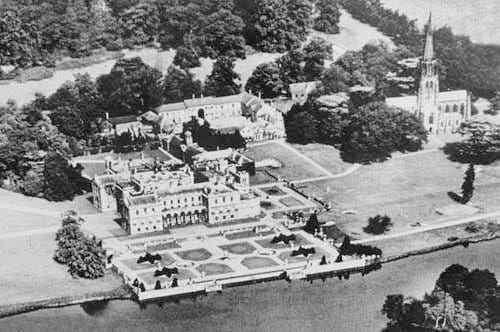
Hi friend,Have you ever wondered about the history behind lawns? Where did they come from? Why do we have them? Well, lawns can be traced back directly to the colonization of America. There are no turf grasses that are native to North America, including “Kentucky” bluegrass. European settlers brought these grasses with them from Europe to feed their livestock. Manors owned by the upper class in England had large lawn-like areas of turf grass surrounding the buildings. These areas were used to “entertain guests.” But they were also seen as a status symbol sending the message that “I own so much land, I can use some of it for nothing.”
Thomas Jefferson was notable for adopting this idealogy and using some of his land for nothing as a symbol of wealth However, the modern lawn as we know it can be attributed to a landscape architect from the mid-1800s named Frederick Law OlmstedIn 1868, Olmsted was commissioned to design the first American suburbs outside of Chicago. He drew inspiration from English manors as a way for middle-class Americans to present the appearance of wealth The first lawns in the US were made from these designs, creating the “American Dream” of a home with a white picket fence Not only did the concept of lawns spread nationwide as a design feature but also as a policy.Today city ordinances and HOAs across the US have mandated lawns as the standard. Even though lawns add little benefit to anything while actively causing a lot of harm to the planet. Americans have now taken up an amount of land similar in size to the whole state of Minnesota with lawns solely for the sake of aesthetics and status symbols And we’ve done this at the cost of the health of our planet and our peopleSo, in 2024 when we just experienced the hottest year in recorded history and we're living through a mass extinction event... It’s time for that to changeOur yards can be used to actively fight climate change, restore biodiversity, and grow food You don’t have to replace your entire lawn at once (or ever for that matter) to make a difference. Even just converting a portion of your yard into a native garden has a huge positive impact. Need help making the change?Enrollment is opening soon for my online course Gardening for the Future!
|
Native Yardening
Ecologist helping North American growers use their yards to help fight the climate crisis 🌻
Hi friend, It’s that time of year again already. The leaves are falling and the humans are packing them into trash bags to send to the landfill, then wondering why they don’t see as many bees or lightning bugs as they used to. It’s not just some weird unimportant coincidence that all the different deciduous trees lose their leaves in autumn. Leaf litter is crucial to healthy soil, wildlife survival & reproduction, and overall ecological health. As the leaves decompose, they add the nutrients...
Hi friend, As I post more on social media about the problems caused by invasive plants, I realize how much misunderstanding there is around these issues. I always get a little discouraged when I see firsthand how misinformed the general public is about how nature works. But I also understand that it's a systemic issue. We aren't taught about these things. I recently made this post on Facebook and Instagram, showing a handful of common invasive species in North America. For some reason, people...
Hi friend, Galls! What are they? Should you be concerned if you see something like this on your plants? A gall is an abnormal growth on exterior plant tissue (leaves, branches, flowers, etc.). They may look like tumors, warts, balls, or lumps, and vary widely in shape, size, color, etc. They’re complex and highly organized structures, and science still has a lot to learn about them. Most galls are caused by insects and other invertebrates like wasps, midges, aphids, mites, etc. either feeding...